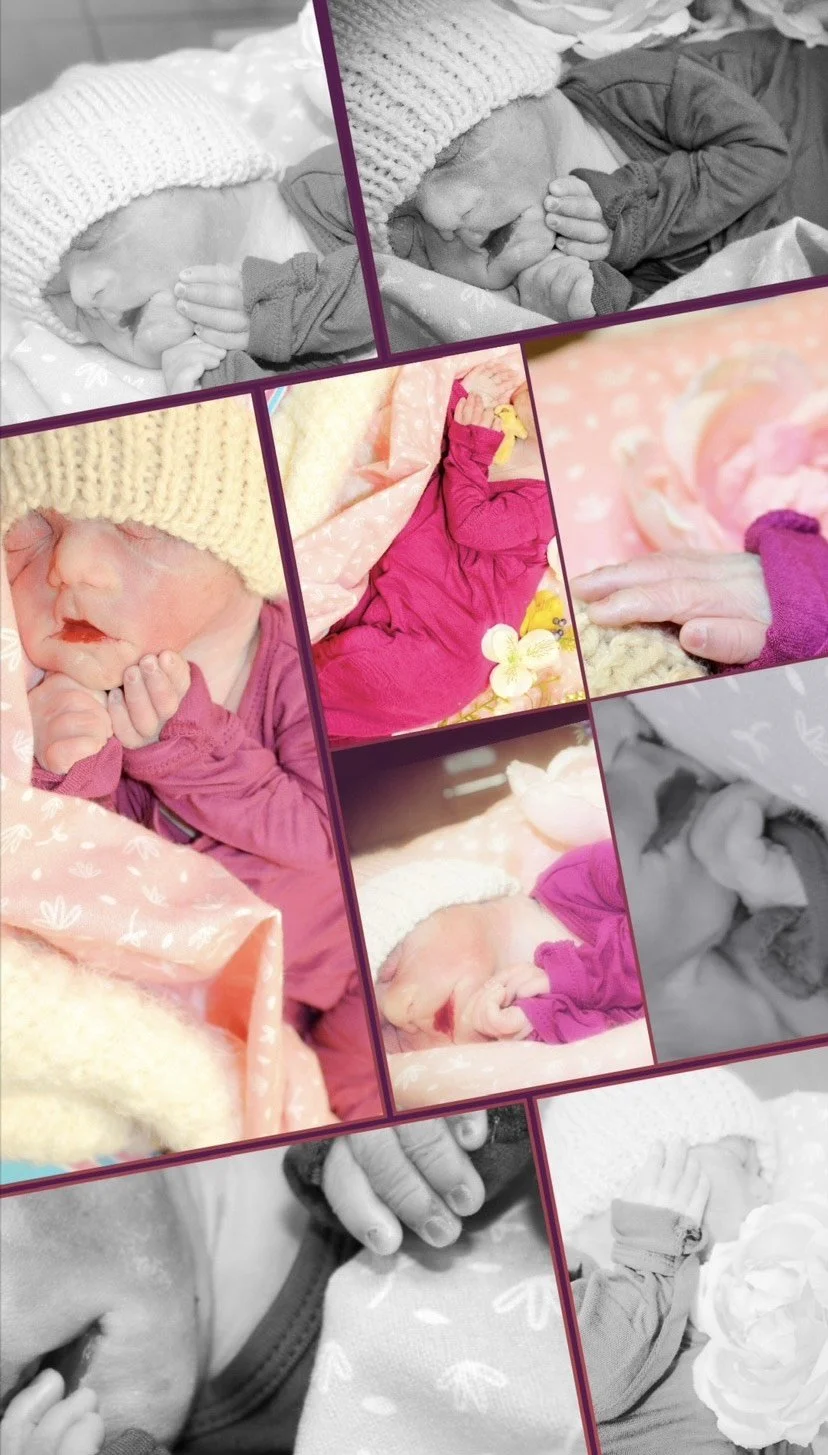
This is Alara’s Story.
My daughter didn’t stop growing.
Her placenta did.
And no one measured it.
This is the story of a love that began before birth and a loss that changed everything, one that could have been prevented.
We share it to honor her life and in hopes of raising awareness about Preventable Stillbirth and Placental Health.
A baby who fought.
A system that did not.
Please read gently.
Alara: A Story of Love, Warning Signs, and Silence
I carried you, and I loved you the moment I found out we created you. But when I heard your heartbeat, that love became fierce. Different. It became war when it came to you.
You gave me my title of mother.
My first pregnancy.
My first birth.
My first child.
Chapter One: Before the World Knew
We didn’t insist on getting pregnant, it just happened.
And we’re glad it did.
On September 3, 2024, something quiet shifted inside me, so subtle that no one noticed it but my body. I didn’t know it yet, but you had already begun. Love had already taken root.
By October 9, 2024 my body made it undeniable. The nausea. The vomiting. The missed period. When I told your daddy, the look on his face said everything: shock, joy, disbelief, and love colliding all at once.
From that moment on, you were no longer just my secret. You were ours. To find out we were 7 weeks along, I felt awe, I felt chosen. As if the universe had placed something sacred inside me and whispered, ‘Protect this.’ Before the world ever met you, you were already deeply loved and wanted.
You were cherished by your grandparents on both sides, who loved you and spoke of you with pride and excitement. You were wanted, prayed over, and celebrated. Your family dreamed of holding you, watching you grow, and loving you for a lifetime. Your cousins, aunts, and uncles were ready to know you and to grow up alongside you.
On November 4, 2024, at eleven weeks, I heard your heartbeat for the first time. Fast. Strong. Steady. I cried happy tears. It is still my favorite sound. I was eager for every ultrasound, every appointment, every chance to see you, hear you, and watch you grow.
I had my first Thanksgiving feeding you while you were in my tummy. Then Christmas.
Then the New Year 2025, the year you were expected to arrive and come home with us.
Chapter Two: Becoming Your Safe Place
I did everything right. I attended every appointment. I asked extra questions. I learned extra knowledge. I downloaded all the apps. I knew how you were developing. I knew when your eyes opened. I knew when it was time for you to start hearing in my womb.
Time moved so fast and so slow at the same time. When I reached eight months, I felt so relieved knowing my baby would be in my arms within two months or less.
It felt like you had been here all along, like you belonged here all along. We were so proud of you. We still are.
I was one of those moms who tracked every appointment and filled the pages with notes. I was already preparing to find you a pediatrician and schedule your doctor visits after birth. I had everything ready to a T. I didn’t drink too much caffeine. I ate healthy. I read the books. I prepared myself. I was careful with everything, from making sure my bath water wasn’t too hot to always sleeping on my side. I did everything I knew to do to prepare for motherhood and to take care of my newborn.
And you already had so much personality.
You would kick your daddy when I laid on my side, holding him with his back against my belly, as if you were saying, “No, this is my space. Get away from Mommy.”
You were already full of humor and attitude. Sassy little girl.
By ten weeks, the sickness disappeared.
By twelve weeks, my body began leaking breast milk, already preparing to nourish you.
At thirteen weeks, I was diagnosed with gestational diabetes.
I failed the one-hour glucose test. Then the three-hour test. I changed everything immediately, low carb, no sugar. I checked my blood sugar four times a day: fasting, then two hours after breakfast, lunch, and dinner. Every Wednesday, I sent my numbers to my specialist. They were controlled.
Because of this diagnosis, my pregnancy was labeled high-risk.
I believed that meant closer attention.
More protection.
Your daddy learned everything alongside me, what I could eat, what I couldn’t, how to help when I felt overwhelmed. He celebrated my good numbers and reassured me when I worried.
On November 14, 2024, a blood test revealed your gender. You were a girl. My girl. Our girl. I knew I was going to have a mini me, a mini us. I dreamed of playing dress-up, doing your hair, and sharing all the girly things with you. Your daddy dreamed of you playing sports, smiling differently after that, softer, prouder, more protective.
At sixteen weeks, my belly began to show.
At seventeen weeks, I felt you constantly, not just at night, but all day, every day.
At twenty-one weeks, I could see your movements beneath my skin.
At twenty weeks and five days, during a long anatomy scan, the ultrasound technician laughed and called you “spicy.” You kicked and rolled nonstop for nearly thirty minutes. You weighed fourteen ounces. Your daddy called you his little athlete. You earned an A+.
Chapter Three: Signs Without Answers
On February 18, 2025, at twenty-four weeks, doctors identified a concern.
They found you were swelling, your abdomen and legs. You weighed two pounds, three ounces. All tests came back negative. They didn’t know why. No one explained what it meant. They said we would find out after birth.
At twenty-five weeks and five days, they told me nothing had changed. Your swelling “looked the same.” Your heartbeat was good. There was “no fluid” retained in the swelling.
That same day, I took a picture of your ultrasound with my phone. I didn’t know why, just instinct. Looking back now, the image clearly shows swelling in your eye.
The same eye that was visibly swollen after birth. For eight weeks, you stayed swollen. They first found it at twenty-four weeks… and by the time you passed, you were nearly thirty-two weeks along.
Eight long weeks of holding on. Of loving you through every moment. Eight weeks of the doctors repeatedly telling me “it’s just in the abdomen and legs.” They kept telling me nothing had changed.
At twenty-seven weeks, you weighed three pounds, nine ounces.
Chapter Four: Missed Warnings
At twenty-eight weeks pregnant, on March 13, 2025, around 9:00 PM, I twisted my ankle and I fell outside while walking to my car.
Almost immediately, the contractions started. We went to the hospital to be safe.
They admitted me overnight because the contractions were coming back-to-back, and at first, they believed my water had broken.
A test even showed what looked like amniotic fluid under the microscope.
Later, they changed course and told me it hadn’t actually broken. They tried to reach my OB and high-risk care team, but no one answered.
Meanwhile, you were incredibly active on the monitors. The nurses even joked, “Does she ever sleep?” But you weren’t just active. You were fighting.
The next morning, March 14 at 10:00 AM, they discharged me. They said the contractions were just a result of the fall. So we trusted them.
Chapter Five: The Night Everything Shifted
On March 31, 2025, at thirty weeks and four days, I saw my OBGYN for a routine appointment.
During that visit, she told me she had noticed something on my bloodwork that she didn’t fully understand. She said she was “a little concerned, but not too terribly.”
She advised me to follow up with my high-risk doctor at my next scheduled appointment on April 8, 2025.
No additional testing was ordered. No urgency was communicated. We were sent home to wait.
At that point, my pregnancy had already shown weeks of unexplained swelling, repeated abnormal ultrasound findings, and ongoing concerns that had never been clearly explained or resolved.
Still, we trusted that waiting was safe.
Around this time, I was told that baby girl would turn into position for birth in a couple of weeks.
Chapter Six: Silence
On April 6, 2025, two days before the next appointment my OBGYN told me to wait for, I felt no movement. It was sudden and out of nowhere. I went to the hospital.
They tried to find your heartbeat but struggled. They had me turn onto my side, hoping for a clearer reading. At one point, they briefly thought they had found it, but it was mine. I wish it had been yours.
They looked at me, gently placed a hand over mine, and said, “I’m so sorry. There is no heartbeat. There is no blood flow to the brain.”
I won’t go into what came after.
In that single moment, everything changed. Our lives were never the same again.
This is a loss we will carry for the rest of our lives, a deep, aching absence that will stay with us until the day we meet you again.
Your entire family came, surrounding us with love, standing beside us in the middle of the unimaginable.
Chapter Seven: The Day You Entered the World and Returned to Heaven
On April 7, 2025, at 31 weeks and 4 days, I gave birth to you, a day before I was supposed to be at that high-risk appointment for more “tests.”
April 7 will always belong to you, our little Aries.
You were born sleeping. You weighed 5 pounds, 3 ounces.
You measured 19.5 inches.
You had full, round cheeks that were pure sweetness.
A beautiful Cupid’s bow with full, plump lips, my lips, a little piece of me on your face.
You had Daddy’s eyes, their shape, eyelids, nose, and a mixture of both our chins.
And then there is your beautiful very dark brown hair, dark enough that it could have looked black at first glance, with soft little curls that looked like the perfect blend of mama and dada woven together into someone completely one of a kind.
Still. Stillborn. Still our baby. Still loved.
Chapter Eight: The Organ That Sustained You
The placenta is an extraordinary organ.
It is created during pregnancy for one purpose: to sustain another life.
It connects mother and baby, delivering oxygen and nutrients to the growing fetus while helping remove waste.
It plays roles that support functions we normally associate with organs such as the lungs, kidneys, liver, and digestive system.
It develops alongside the baby, grows throughout pregnancy, and is meant to keep pace with the increasing demands of a growing child.
For Alara, the placenta was the organ she depended on for every breath of oxygen and every nutrient she received before birth.
When Alara died, her fetal autopsy did not identify a clear cause of death. Her genetic testing was normal.
There was no infection.
But her placenta told us the answer.
And it was an organ we did not know was struggling.
Early in pregnancy, the mother’s spiral arteries are small, high-resistance blood vessels.
During normal placentation, specialized placental cells remodel these vessels so they become wider, lower-resistance pathways capable of delivering much more blood to the placenta.
When this process does not occur properly, blood flow to the placenta can be affected. Abnormal placentation and incomplete spiral artery remodeling are recognized mechanisms associated with placental dysfunction and insufficiency.
In Alara’s pregnancy, we cannot say with certainty whether my spiral arteries widened but they were not seen in pathology.
We do know that her placenta ultimately showed evidence that it had not been able to adequately support her as pregnancy progressed.
And because the placenta was never measured during my pregnancy, we had no way of knowing that its growth was not keeping pace with hers.
One of the things I have learned since losing Alara is that watching a baby grow does not necessarily tell us how well the placenta is supporting that baby.
We are often reassured when a baby is measuring appropriately, or even measuring large.
But fetal growth and placental health are not the same measurement.
Placental abnormalities can be associated with stillbirth even when a fetus is not growth restricted. In other words, a baby does not have to be small for a placenta to be failing.
Some babies may slow their growth to match the placenta’s limited capacity. Others continue growing and can eventually outgrow the amount of oxygen and nutrients that their placenta can provide.
Alara was not a tiny baby who stopped growing.
She was a growing baby whose placenta was unusually small for the amount of baby it was supporting.
For her gestational age, that placed her around the 98th percentile for fetal weight.
Her placenta weighed only 283 grams, or about 10 ounces.
Her placenta was around the 10th percentile for placental weight.
But what do those percentiles actually mean?
Percentiles compare a measurement with measurements from others at the same stage of pregnancy.
When Alara was around the 98th percentile for weight, she was larger than approximately 98 out of 100 babies at the same gestational age.
When her placenta was around the 10th percentile, approximately 90 out of 100 placentas at that stage weighed more than hers.
So the difference was not simply that Alara was big.
It was that the organ responsible for supporting her was unusually small in comparison.
That means Alara weighed approximately 9.5 times as much as her placenta.
The fetal-to-placental ratio matters because the placenta has to support the baby attached to it.
As a fetus grows, the demands placed on the placenta increase. A disproportionately small placenta may have less capacity to meet those increasing demands.
Measure the Placenta identifies a fetal-to-placental ratio of 8:1 or higher as a concerning finding in the context of stillbirth evaluation.
Alara’s ratio was 9.5:1.
Her umbilical cord also showed findings consistent with prolonged compression.
And her heart appeared to have been under strain before her death.
Placental pathologist believes the combination of findings, including the swelling seen in her tissues, was suggestive of congestive heart failure before death, potentially related to inadequate oxygen delivery from placental insufficiency.
That possibility helped connect pieces of Alara’s story that had never made sense to us before.
The swelling we saw before.
Isn’t the placenta already being measured during pregnancy?
The placenta is seen and evaluated during prenatal ultrasounds.
But placental size or volume is not routinely measured as a standard part of prenatal care by most providers today.
After losing Alara, I learned about Estimated Placental Volume, or EPV, through Dr. Harvey Kliman and Measure the Placenta.
EPV is a way of estimating placental volume while a baby is still in the womb.
It uses three ultrasound measurements:
width, height, and thickness.
Those measurements can be entered into a formula to estimate the volume of the placenta and compare it with expected placental size for that stage of pregnancy.
Measure the Placenta states that EPV can be obtained using standard two-dimensional ultrasound and that the three measurements can take less than a minute when performed by someone trained in the technique.
That concept stayed with me.
Because measuring the baby tells us about the baby.
It does not necessarily tell us how well the placenta is supporting that baby.
That is why I continue to speak about Alara.
Not because I believe every stillbirth can be prevented by one measurement.
Not because measuring a placenta can guarantee a healthy outcome.
But because Alara taught me that there is more to pregnancy monitoring than watching the baby grow.
There is the organ that allows the baby to grow in the first place.
Dr. Harvey Kliman’s and Measure The Placenta message stayed with me was simple:
MEASURE THE PLACENTA.
And because families deserve to understand the organ that is sustaining their babies.
What we learn from her may help another family ask a question sooner.
And one question, asked at the right time, could someday save a life.
Chapter Nine: Why This Was Preventable
For eight weeks, Alara showed visible, documented signs of distress.
She was swelling.
Ultrasounds showed it.
Doctors acknowledged it.
Lots of things were brushed off, including a blood test and I got sent home with concerns instead.
They said they didn’t know why.
They said we would find out after birth.
The placenta was never measured.
Advanced monitoring was not escalated.
Early delivery was not offered.
I was not offered advanced ultrasounds.
A baby should not swell for eight weeks without action. NICUs exist for this exact reason. At her size and strength, early delivery could have saved her life.
Instead, she remained attached to a failing placenta.
Alara did not have to pass away.
Throughout my pregnancy, every lab result, blood and urine, showed that my immune system was highly revved up and my body was under significant stress. I have the medical records to prove it.
And yet, no one ever made me aware that anything was wrong.
No mother should be told everything is okay when it isn’t.
Chapter Ten: Everything We Lived
I lived every part of pregnancy.
The maternity clothes.
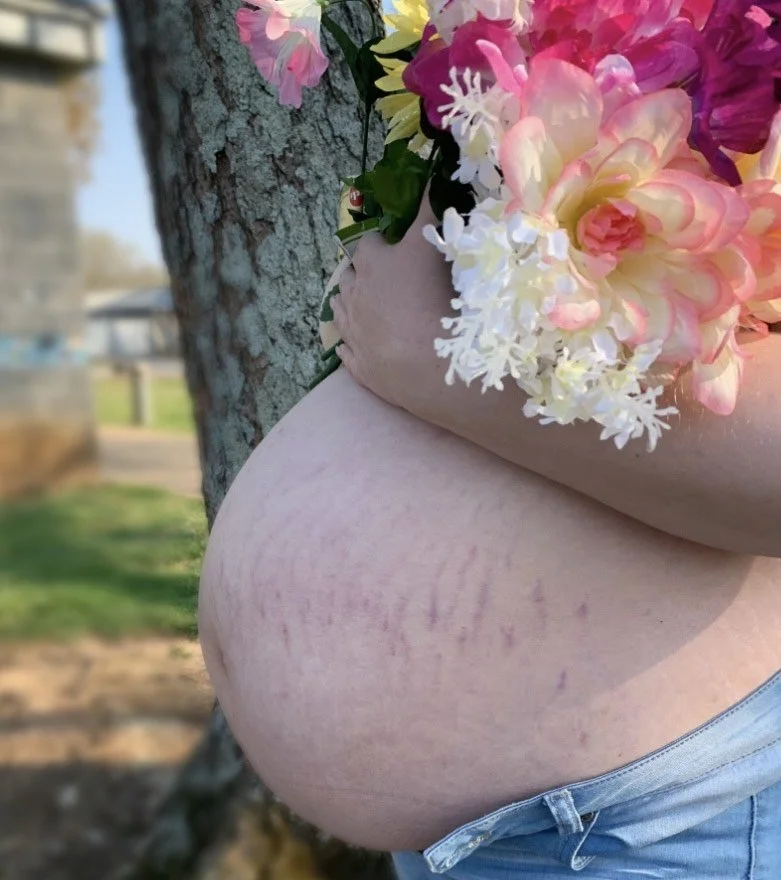
The maternity pictures.
The memories.
The belly creams.
The packed hospital bag.
The nursery, the theme: fairies.
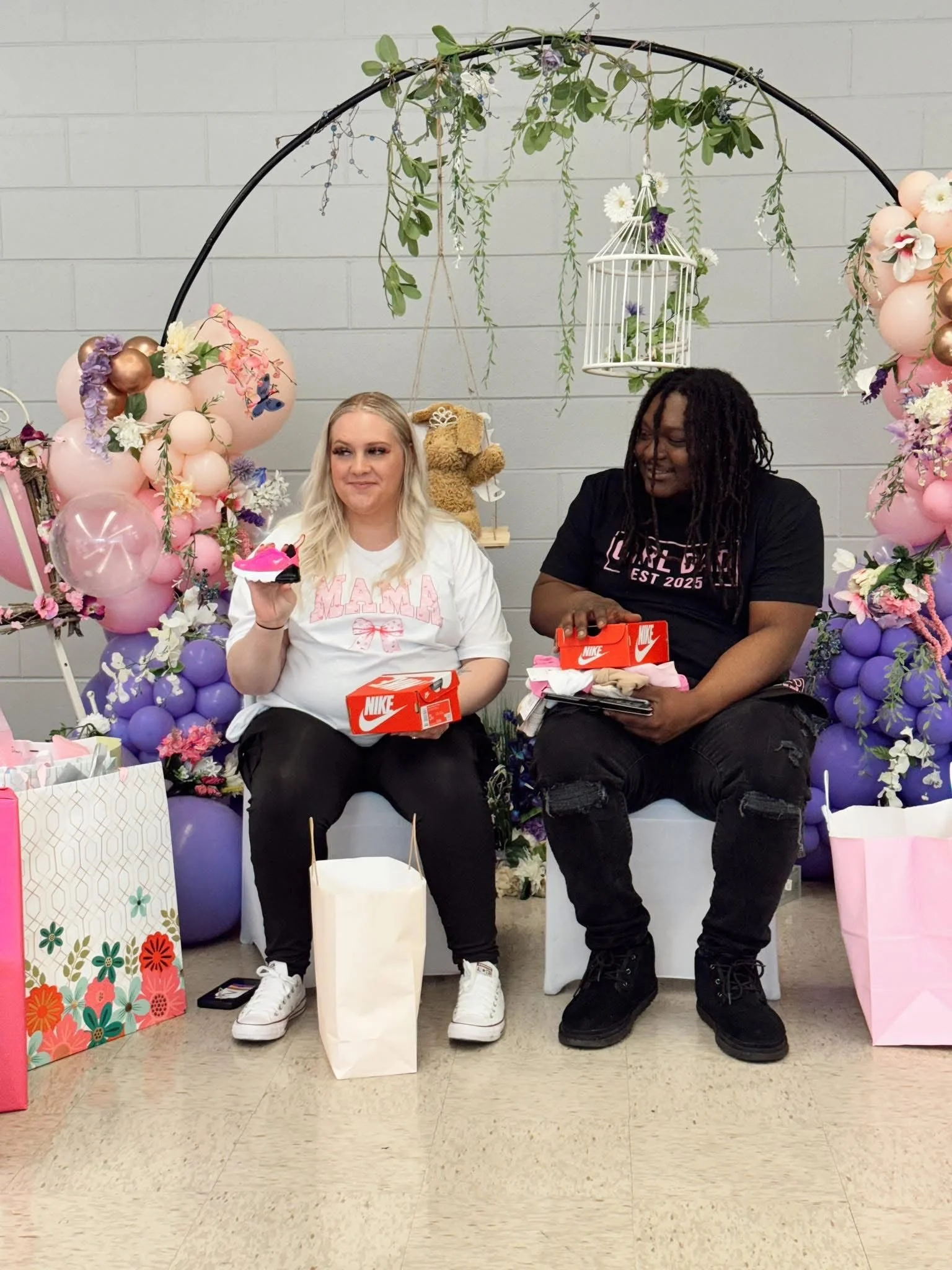
The baby shower.
The gender reveal, December, Christmas-themed, gingerbread-themed.
The clothes washed and folded.
We had your baby shower one week before your passing, at the end of March. Fairy-themed everything, butterflies, mushrooms, a fairy world of pink and purple glitter. Lily pads.
I chose this theme because your name, Alara, means water fairy.
Chapter Eleven: Please Save a Life
Placental insufficiency is detectable before loss. Estimated placental volume (EPV) and routine placental measurements during ultrasound can identify placentas early, allowing for increased monitoring or timely intervention.
My daughter’s placenta told a story, but it was only heard after she was gone.
Measuring the placenta could have changed the outcome.
This is why placental measurements must become a standard part of prenatal care, not an afterthought discovered in pathology reports.
Help support Measure the Placenta’s mission to make placental measurements part of standard prenatal care.
Share your story on social media. Tag @measuretheplacenta and/or submit at measuretheplacenta.org/stories.
Volunteer to help Measure the Placenta spread awareness about preventable stillbirth and placental health.
Talk to your OB, MFM, or sonographer about measuring the placenta.
We carry you in every breath, every step, and every tomorrow.
Loved for a lifetime. Missed beyond words.
Say her name today and always - Alara.
Today, we are changed, but still standing and hold space for other families.
Alara’s Legacy - For Every Baby
In Loving Memory
Alara Nikole Sand
Born sleeping April 7, 2025
31 weeks, 4 days
5 lbs 3 oz • 19.5 inches
Written by:
Alexis Womble
January 2026
© Alexis Womble & Aaron Sand. All rights reserved.